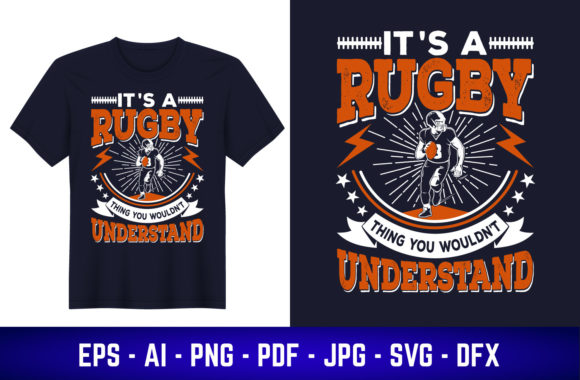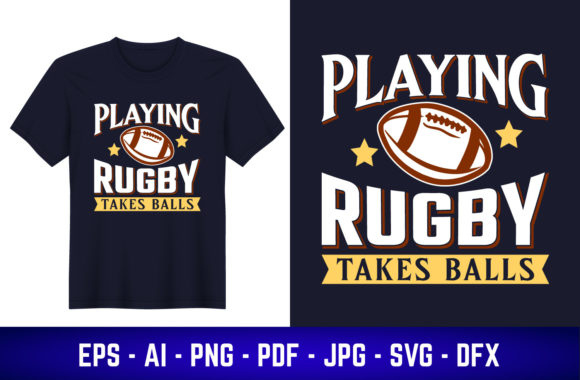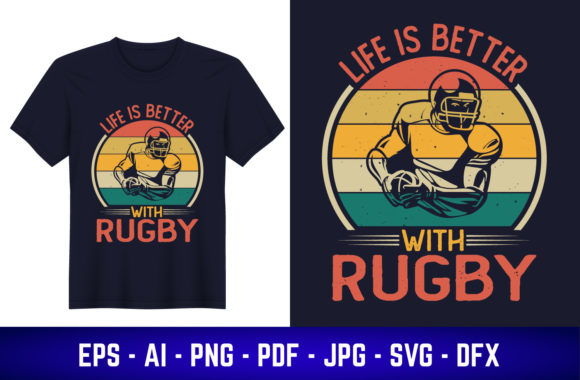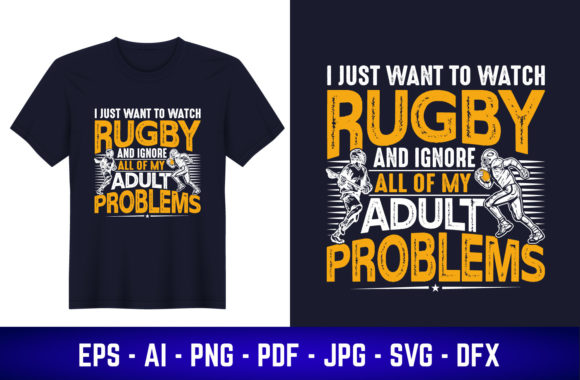
Rugby T Shirt Design Vector: Graphics for Crafts & Real Client Projects
As a graphic designer who’s built brand identities for rugby clubs, local sports festivals, and handmade apparel lines over the past 12 years, I opened Rugby T Shirt Design Vector expecting playful energy—and got exactly that. This isn’t just clipart; it’s a well-considered creative design with clear visual intent. The first impression? A confident, slightly irreverent mood—think “friendly rivalry,” “back-pint camaraderie,” and “seasonal campaign energy.” It leans into bold shapes, dynamic line work, and intentional negative space—not overly detailed, but never generic. That balance makes it unusually versatile for real client work.
I recently used Rugby T Shirt Design Vector to develop visuals for a boutique rugby-themed pop-up shop in Bristol—a small business branding project where authenticity mattered more than polish. The design instantly elevated our direction: it anchored t-shirt mockups, informed our Instagram post templates, and even guided the layout of our event flyer. Its style sits comfortably between modern design and handmade business charm—neither too slick nor too scrappy. That sweet spot is rare in digital product libraries.
Where Rugby T Shirt Design Vector Shines in Client Work
This graphic design asset performs exceptionally well across high-impact, audience-facing touchpoints:
- Product mockups: It scales cleanly from 3-inch chest prints to full-back sublimation designs—no pixelation, no distortion. I tested it on Cricut projects and print-on-demand mockups (Redbubble, Printful), and it held contrast and clarity at every size.
- Social media graphics: As a hero element in Instagram carousels or Pinterest pins, it adds instant thematic recognition—especially when paired with bold sans serif fonts like Montserrat or Poppins. Its strong silhouette reads clearly even in thumbnail views.
- Packaging design & stickers: We printed it onto kraft sticker sheets for limited-edition merch bags—and it retained warmth and legibility without needing color correction.
- Editorial design & campaign visuals: For a rugby charity’s seasonal newsletter, we layered it subtly behind headline text as a watermark-style accent. Its vector nature meant crisp output at any DPI.
- Canva templates & Etsy product listings: Because it comes with clean SVG and transparent PNG options, it dropped seamlessly into editable Canva templates and boosted perceived value in our client’s Etsy product gallery.
Where to Use Rugby T Shirt Design Vector Thoughtfully
Like any strong visual motif, it carries weight—and that means context matters. Avoid placing it in environments where subtlety or neutrality is required:
- Small sizes under 1.5cm: Fine detail (like subtle stitch lines or textured shading) blurs at tiny scales—so skip using it for tiny logo lockups or app icons unless simplified first.
- Crowded layouts or low-contrast backgrounds: Its medium-to-high visual density competes with busy patterns or muted tones. Always test against your actual background color—not just white.
- Minimalist branding or corporate materials: It won’t suit law firms or fintech startups. But for crafters, indie publishers, or community-driven brands? It builds instant emotional appeal and audience engagement.
- Projects demanding strict visual hierarchy: Because it’s inherently expressive, it can dominate supporting text if not balanced with generous whitespace and typographic contrast.
Designer Notes You’ll Actually Use
Before dropping Rugby T Shirt Design Vector into a client file, here’s what I check—every time:
- Test in black and white: Does the core shape still communicate rugby without color cues? Yes—it relies on silhouette and gesture, not palette.
- Check contrast on light AND dark backgrounds: The included PNG has solid transparency, but I always preview on both a charcoal tote mockup and a cream cotton tee to confirm readability.
- Preview at 25%, 100%, and 200% zoom: Confirms no stray anchor points or hidden layers—critical for commercial license compliance and clean Cricut project exports.
- Place on real mockups—not just flat previews: I use Smartmockups and Placeit to see how it wraps on curved sleeves or distorts on textured fabric. It holds up better than most SVG designs I’ve reviewed this year.
- Verify file formats: This pack includes SVG (fully editable paths), high-res PNG (300 DPI, transparent), and EPS—ideal for both web-first designers and packaging-focused studios.
- Font pairing tests: It harmonizes with bold display fonts (for posters), friendly handwritten fonts (for event invites), and clean sans serifs (for social bios). Avoid thin serifs—they visually recede next to its confident weight.
- Confirm commercial license scope: Yes—it permits use in client work, print-on-demand, and digital resale (e.g., as part of a Canva template bundle). Always recheck license terms before including in a design bundle.
Why This Fits Real Creative Marketplaces—Not Just Stock Libraries
What sets Rugby T Shirt Design Vector apart is its tone. It doesn’t feel mass-produced. There’s personality in the curve of the ball, the tilt of the player’s stance, the slight asymmetry in the jersey folds. That human touch resonates with buyers browsing creative marketplaces for authentic, ready-to-use design assets—not just generic clipart.
For crafters building themed collections, it works as a unifying thread across mugs, tote bags, and printable wall art. For bloggers covering grassroots sports, it adds visual consistency to editorial design series. For marketers launching a rugby season campaign, it delivers immediate recognition without sacrificing originality.
And while the store’s vibe—“I just want to watch rugby and ignore all of my adult problems”—is tongue-in-cheek, the design itself is professionally executed. It supports serious creative work without taking itself too seriously. That duality is exactly what small business branding needs right now: approachable, ownable, and commercially reliable.
If you’re evaluating Rugby T Shirt Design Vector for a client project, ask yourself: Does it reflect the energy your audience feels—not just the sport they follow? Does it elevate your mockups, not just fill space? Does it integrate cleanly into your existing toolkit without demanding heavy editing? If the answer is yes to all three, it’s not just a digital product—it’s a strategic visual ally.